
Many parents wonder when dental care should begin for their child. Because baby teeth eventually fall out, it can be tempting to delay the first dental visit. However, early dental care plays a critical role in a child’s overall health and development. Pediatric dentists specialize in caring for children’s teeth, gums, and mouths from infancy through adolescence, and early visits help establish healthy habits that can last a lifetime. Dental health is closely connected to general health. Tooth decay is one of the most common chronic childhood conditions, and it can begin as soon as the first tooth appears. Early visits to a pediatric dentist allow problems to be identified and addressed before they become painful, costly, or complicated.
The Recommended Age for the First Visit
Most dental and pediatric health organizations recommend that children see a pediatric dentist by their first birthday or within six months of the eruption of their first tooth. This timeline often surprises parents, but it is based on strong evidence that early prevention is far more effective than later treatment.
At this age, the appointment is usually short and gentle. The dentist examines the child’s mouth, checks tooth development, and looks for early signs of decay or other issues. Parents also receive guidance on proper cleaning, feeding habits, and oral development. These early visits are as much about education and reassurance as they are about examination.
What Happens During Early Dental Appointments
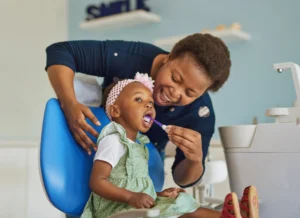
A child’s first dental visits are designed to be positive and stress-free. The dentist may demonstrate how to clean tiny teeth, discuss the use of fluoride, and explain how habits such as thumb sucking or prolonged bottle use can affect oral health. As the child grows, appointments gradually include more thorough cleanings and age-appropriate preventive care.
These early experiences often help children become comfortable in the dental environment. When dental visits are routine and non-threatening from a young age, children are less likely to develop fear or anxiety later on. This comfort can make future appointments smoother and encourage better cooperation as children grow older.
Benefits of Seeing a Pediatric Dentist Early
Pediatric dentists receive specialized training in child development and behavior, which allows them to tailor care to a child’s emotional and physical needs. Early visits help monitor jaw growth, tooth alignment, and bite development, making it easier to identify potential orthodontic concerns early.
Regular dental visits also reinforce healthy routines at home. Parents learn how diet, brushing habits, and daily routines impact oral health. This guidance is especially valuable during early childhood, when eating patterns and hygiene habits are being formed.
Another important benefit is early detection. Cavities, enamel defects, and gum issues can often be treated more simply when caught early. Preventive measures can reduce the likelihood of pain, infection, or the need for more extensive procedures later in childhood.
Building Lifelong Healthy Habits
Starting dental visits early sends a clear message that oral health is an important part of overall wellness. Children who grow up with regular dental care are more likely to continue those habits into adulthood. They learn that visiting the dentist is a normal part of staying healthy, not something to fear or avoid.
Early dental care also supports confidence. Healthy teeth contribute to clear speech, comfortable eating, and a positive self-image. By prioritizing dental visits from a young age, parents help set the foundation for both physical health and emotional well-being.
Pediatric Dentist in Buford, GA
At Lanier Family & Cosmetic Dentistry, we are dedicated to helping all members of your family maintain health bites and smiles. Early dental care is crucial to support proper oral development and comfort. If your child already has their first baby tooth, don’t hesitate to reach out. Contact our office today to schedule their first appointment and set them on the road to good oral healthy.